 Okaasan
How I made Okaasan 70× more reliable than ChatGPT by adding a safety net of fixed rules to every AI verdict.
On the same real Japanese food labels, Okaasan was also 57× more reliable than Gemini and 35× more reliable than Claude.
An AI scanner for Japanese food labels and restaurant menus, built for people who want to know what they're eating.
- Role
- Founder
- Context
- Independent project
- Period
- - Present
- Location
- Tokyo
TL;DR
Food labels in Japan are hard to read if you don't speak Japanese. That's annoying enough. But when allergies are involved, a wrong answer can be deadly.
I designed Okaasan to read Japanese food labels and menus using AI. The tricky part was making sure the AI didn't confidently tell someone a product was OK when it wasn't.
So I added a safety net of fixed rules that checks the AI's answers against the actual ingredients.
I tested it on 115 real Japanese products, 345 analyses in all. Before and after the safety net, potentially dangerous AI mistakes went 389 → 0.
On the same labels, Okaasan was 70× more reliable than ChatGPT, 57× than Gemini and 35× than Claude.
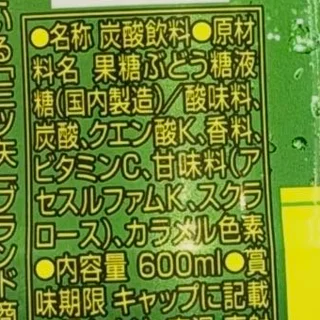
Mitsuya Ultra Strong Lemon
Lemon soda by Asahi, 600 ml
炭酸飲料
- Vegan
- Vegetarian
- Halal
- Gluten-free
- No caffeine
- No allergens listed
- Contains sweeteners
- Calories
- 228 kcal for the whole bottle
- Sugar
- About 59 g, more than the WHO's 50 g limit for a whole day
- Citric acid
- 8,100 mg, roughly the juice of four or five lemons
- Ingredients
- Fructose-glucose syrup, acidity regulator, carbonation, potassium citrate, flavouring, vitamin C, sweeteners (acesulfame K, sucralose), caramel colour
Fine for vegan, halal and gluten-free diets. The catch is the sugar: one bottle has more than you should have in a day, with two sweeteners on top. It's sour on purpose, too: the label calls it the sourest drink in Mitsuya's history.
Context
Okaasan reads Japanese food labels and menus for foreigners living in Japan or just visiting.
But it's not just for foreigners. It's also for Japanese people who want to know more about what they're eating.
You take a photo, and Okaasan translates what's written and checks it against your diet and allergies: halal, vegan, gluten-free, pork, alcohol and the allergens on your profile.
In Europe, I got used to checking what's in everything I eat and drink. I wanted to make that just as easy in Japan, whatever language the packaging is in.
After all, health should come first.
the whole idea
The problem
If you have an allergy or a strict diet, the small details on a Japanese label matter.
Pork can hide in the final parenthesis of an ingredient list. Soy sauce and miso can contain alcohol. And a warning in tiny print can say the factory also handles milk.
An AI model can read a label well and still give a wrong verdict. If the app says "OK" when it shouldn't, someone might eat something they need to avoid.
My role
I designed Okaasan and built it with AI coding agents, mainly Claude Code.
I made the product and architecture decisions: what the app checks, how it reaches a verdict, what it looks like and what it costs.
I investigated the failures, decided how to fix them and tested the results on real Japanese labels.
And I wanted real products, not just sample labels. So I went out, bought Japanese food products and photographed their labels. That's how the test set started.
The trade-offs were mine too. When the label doesn't settle a question, the app says "unclear" instead of "OK". And if it can't read the ingredient list, nothing comes out "OK" at all.
I also crafted the whole art direction, from the voxel world to the way Okaasan speaks.
Building and testing
I picked hard cases on purpose: hidden pork, gelatin of unknown origin, alcohol in fermented sauces.
Before any test ran, Claude Code wrote the reference answers for each label from its photo, so every run would be scored against the same answers, written in advance.
My first test used a handful of these labels. Most of the time, the AI called a pork soup or a chicken bowl vegan or vegetarian.
Not exactly what you want from a food scanner.
So I changed two things. The prompt now asks the AI where each ingredient comes from. And a safety net of fixed rules checks every diet verdict against the ingredients, in Japanese and in English.
Then I ran the safety net over the scans already saved in the app. It caught a pork curry marked vegan and a panna cotta marked vegetarian, and corrected what the app showed.
Next, I put the safety net itself to the test. Sometimes it was too careful.
It took plum flesh (梅肉) for meat because the Japanese word uses the character for meat. It also flagged gluten in a soy sauce whose name literally says it's made without wheat.
I fixed both.
lib/dietGuard.test.ts
// 梅肉 is plum fleshconst chuno = guardProduct(The AI could also miss a factory warning in tiny print. So a second AI call now reads only the small print. An allergen it finds in that warning shows as "same factory", never as "not listed".
Menus were even harder. They often tell you what a dish is called, but not what's actually in it.
On a soba restaurant's ticket machine, the AI said the curry rice had no pork. Now, Okaasan never assumes that curry on a menu is pork-free or halal.
Take a photo of the menu
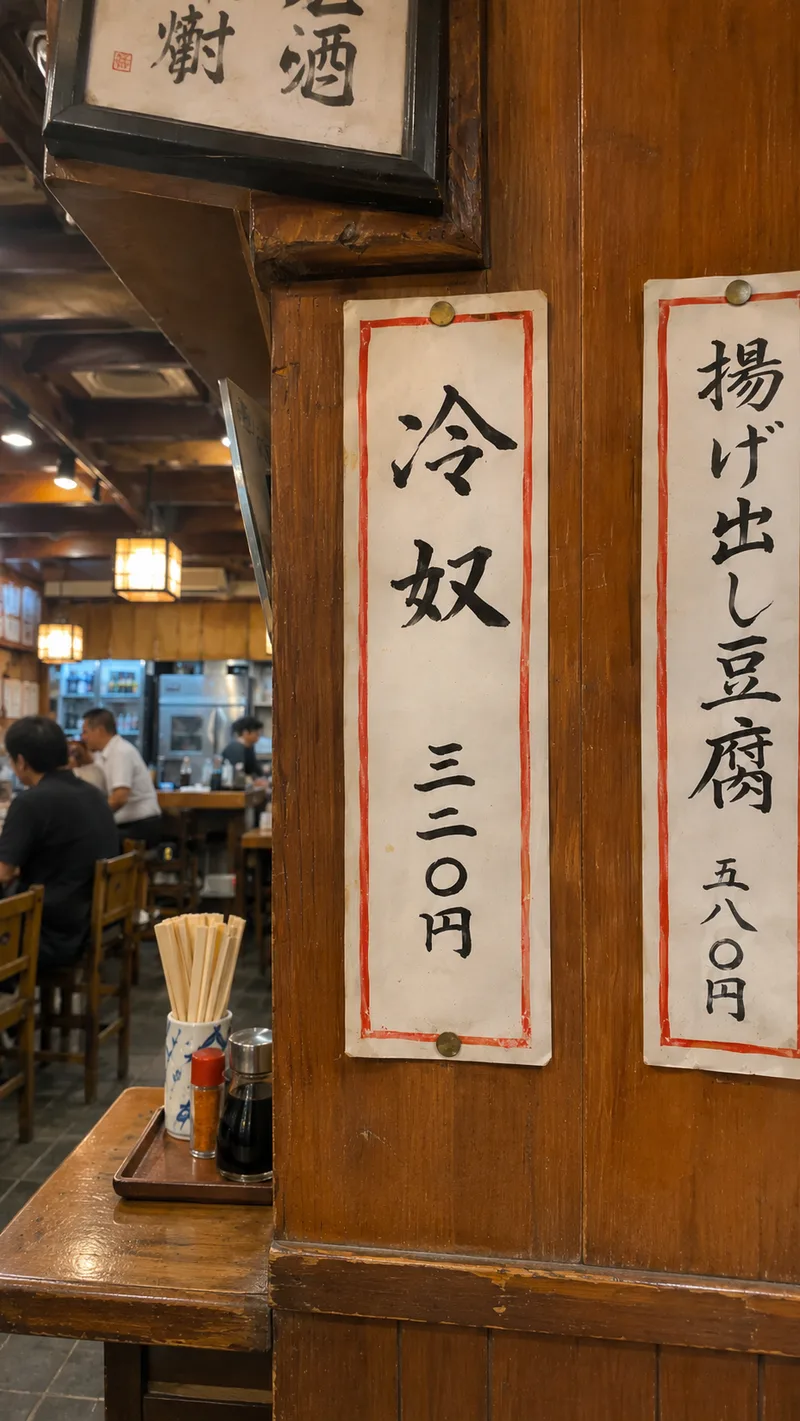
See what Okaasan finds
Hiyayakko
Chilled tofu with soy sauce
冷奴
320 yen
about $2.05
- Not Vegan
- Not Vegetarian
- Not Gluten-free
- Unclear: Halal
- Contains fish
- Contains soy
- Calories
- 90 to 140 kcal, estimated
- Likely contains
- tofu, soy sauce, green onion, grated ginger, bonito flakes
- Confidence
- High
The bonito flakes are dried fish. To skip them, ask for katsuobushi nuki. The soy sauce has wheat, and some brands add a little alcohol, so halal is unclear.
See the dish
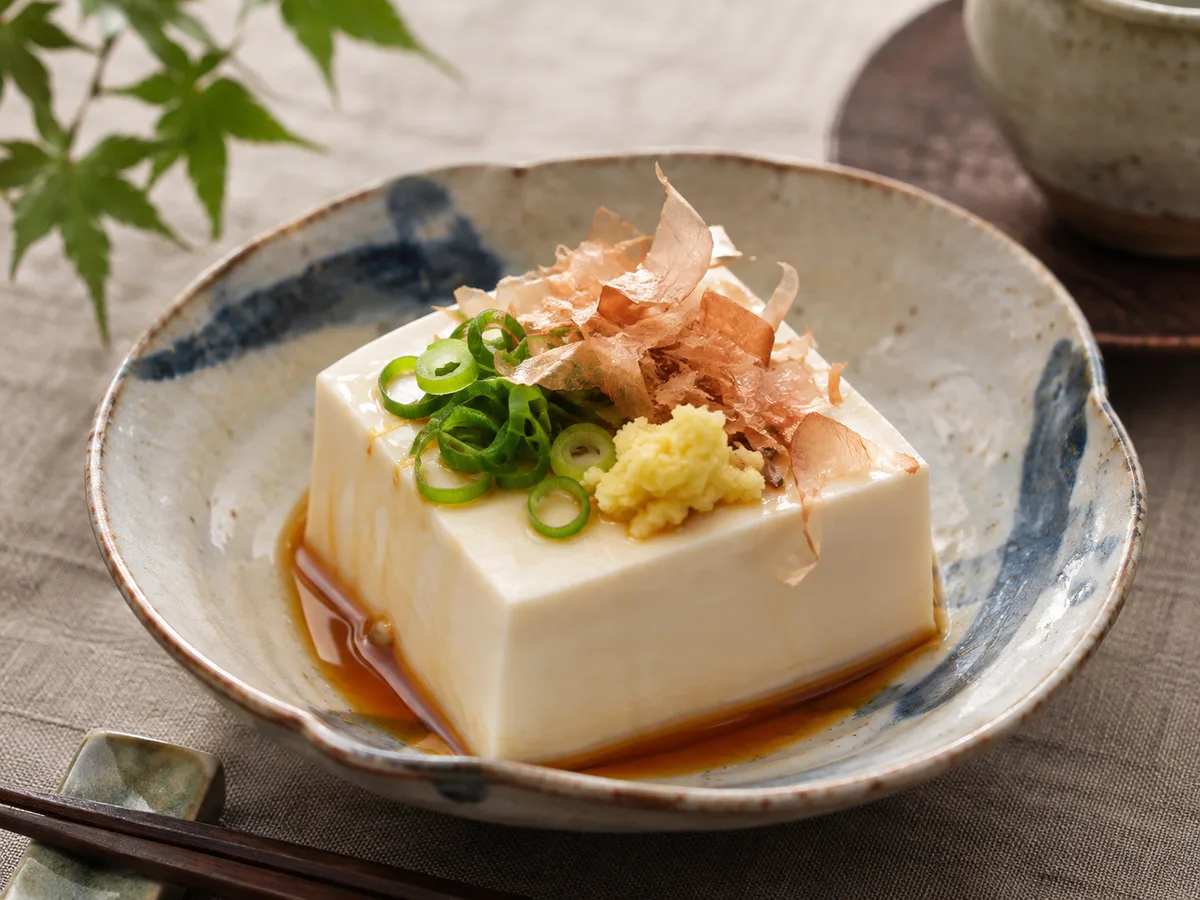
The picture comes after the scan
Across all those rounds, the tests add up to 1,500+ documented analyses of labels and menus.
Each fix came with automated regression tests to catch the same mistakes if they ever come back.
Key decisions
A safety net on every AI verdict
I could have trusted the model's verdict on its own, but a wrong "OK" costs more than an "unclear".
So the model proposes a verdict, and the safety net has the last word.
It can only make a verdict more cautious, never less.
not sexy, but healthy
AI proposesFixed rules decide
Your photo of the label
One or two photos of the pack.
At the same time
AI
Okaasan's AI reads the label
- Translates the ingredient list
- Says where each ingredient comes from
- Lists the allergens
- Proposes a verdict for each diet
- Writes Okaasan's note
AI
A second read, for the small print
Asked for nothing else, it copies word for word:
- The factory warning
- The allergen box
- A printed vegan statement
- A halal certification
Fixed rules
Allergens put together
- The ones the allergen box names
- The ones the ingredient list shows
- Those in the factory warning, kept apart as "same factory"
- Printed vegan and halal marks, passed on to the safety net
Fixed rules
The safety net
Checks every diet verdict against the label itself, in Japanese and in English.
- OK
- Unclear
- No
A verdict only moves towards caution, never back.
No ingredient list read? Nothing comes out OK.
A pork soup the AI called vegan comes out not vegan.
AIFixed rules
Okaasan's note
Checked against the verdicts. If it disagrees, the AI rewrites it. If it still does, it's left out.
Fixed rules
Your profile
Each diet and allergen you picked, checked against the label.
The most careful answer wins:
Not for you
The label shows something you avoid.
Some points are unclear
The label can't tell, or the same factory handles it.
All clear
The ingredient list was read, and nothing you avoid is in it.
On the same labels, Okaasan was 49× more reliable than its own AI model working alone.
Same model. Different system.
What Okaasan highlighted, for halal
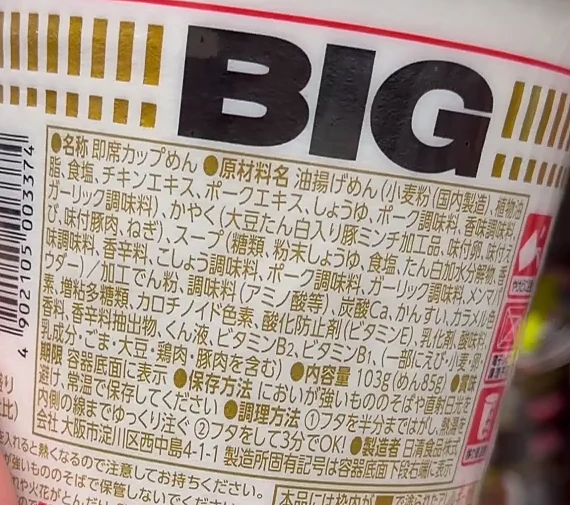
- Chicken extract not certified halal
- Pork 5 times
- Soy sauce may contain alcohol

Pick your diet, then take the photo.
A voxel world for what Okaasan reads
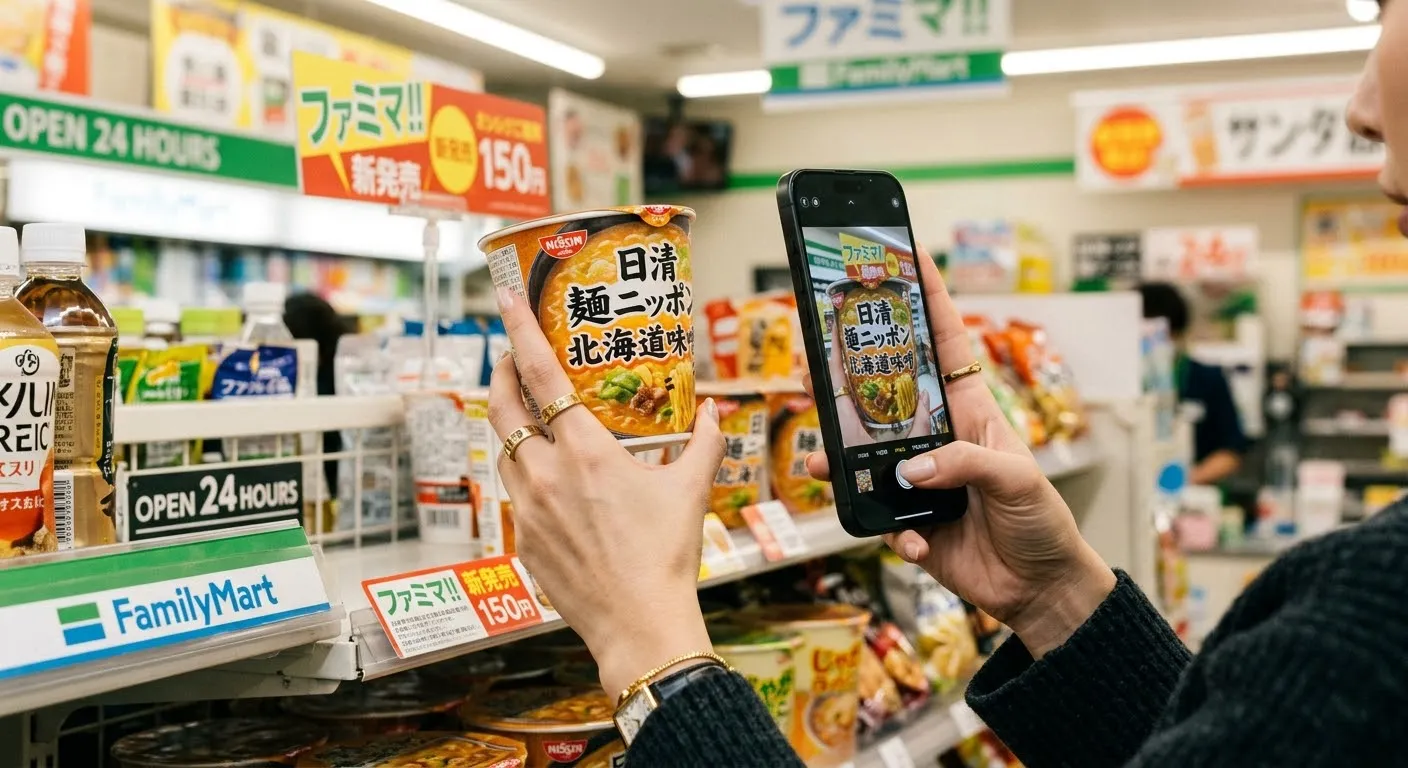
Imagine walking into a konbini, surrounded by packaging you can't read.
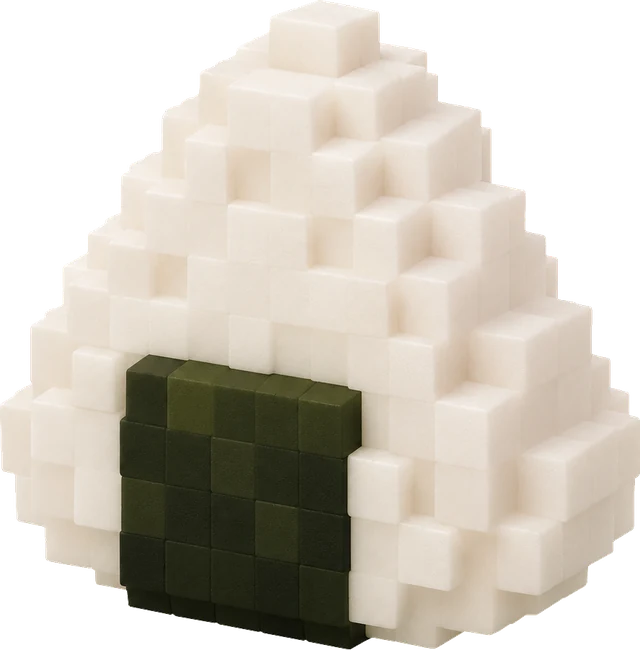
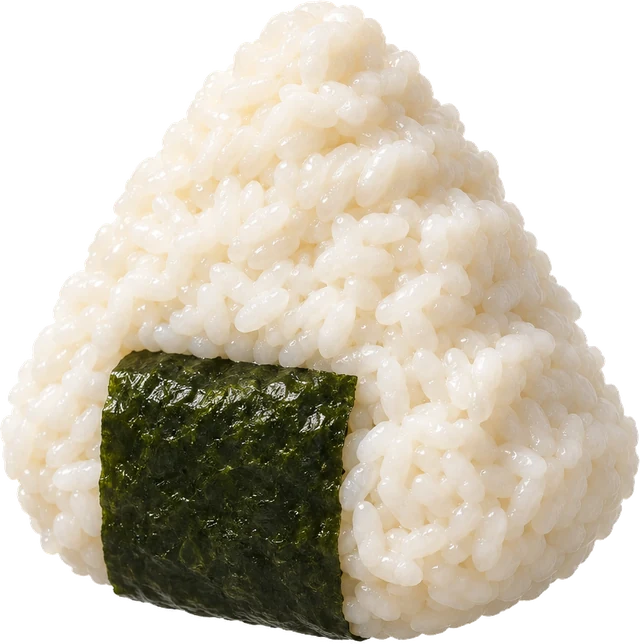
I turned that moment into the look of the whole site: the real world is out of focus, and everything Okaasan adds is sharp.
Real things stay real: photos and videos shot on a phone, in actual shops.
Okaasan's own world is built from voxels and pixels, with a single green. The scan links the two: a green line sweeps over a real onigiri, a flash goes off, and the onigiri turns into voxels with its facts beside it.
"Okaasan" means mother in Japanese.
So the app checks a label the way a Japanese mum checks homework. It highlights the words that matter on the label itself and stamps its verdict like a seal. In the comparison table further down, Okaasan gets a hanamaru, the flower drawn on schoolwork when you've done particularly well.
I wanted that idea to carry through every page.
When a demo used a drawn copy of a label, I had it replaced with a photo of the real one. And I had every icon redrawn in pixels, down to the sun and moon of the dark mode switch.
Yes, even those.
Blurry until Okaasan reads it

Okaasan's head, beside her wordmark.
Pixel icons: every icon is drawn in pixels, 2px each.
The type: Instrument Serif for statements, Switzer for facts, Switzer italic when Okaasan speaks.
The palette: Genki Green for the brand, then Steel Navy, Paper Beige, Pencil Red and Marker Yellow.
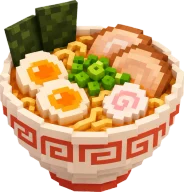
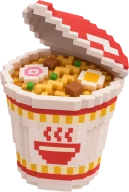
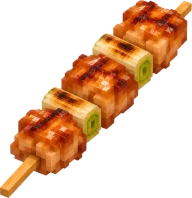
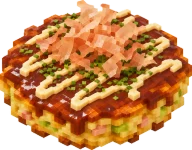


Voxel food: ramen, a Cup Noodle, yakitori, okonomiyaki, a donut and chocolate strawberries.
Blocks: buttons with a darker side face, the Nutri-Score and NOVA scales, a fact and Okaasan's tags.
Measure the cost of a scan before setting a price
Every scan costs money.
So I worked out the unit economics before setting the price, instead of figuring out the margin later.
Since the first subscriber, subscriptions have covered what Okaasan currently costs to run.
Monthly
Launch price$9instead of $20a month
You keep the launch price for as long as you stay subscribed. Cancel anytime.
Only for the first 30 subscribers.
Traveler Pass (31 days)
Pay once$14instead of $24for 31 days
Everything in Monthly, for one trip.
Starts the day you pay.
No renewal and nothing to cancel when you fly home.
Claim only what the tests prove
With AI, the real work is knowing where it works and where it doesn't.
On okaasan.app, every reliability figure comes from a documented test, and you'll never see claims like "safe for allergies" or "certified halal".
I picked the test products for their difficulty, so I never turn the results into an overall accuracy score. Every comparison with ChatGPT, Gemini or Claude also comes with its method.
Results
In , I ran the tests with the production settings:
- 115
- real Japanese products tested, 3 times each
- 389 → 0
- dangerous AI mistakes, before and after Okaasan's safety net
- Latest test of each product. Not a safety certification.
- 99%
- of dishes found on 15 real restaurant menus (471 of 475)
- 309
- automated tests, 79 of them on diet and allergy safety
I wanted to know how much of the improvement came from the system I built, rather than just the AI model behind it.
So I compared Okaasan with ChatGPT, Gemini, Claude and its own AI model working alone.
Each of them got the same labels and the same prompt, one analysis per product. Okaasan ran as it does in production, as in the tests above. Every answer was scored against the same reference answers.
An answer counts as unreliable when it's wrong, or when it says "unclear" even though the label provides the answer.
Both count: a scanner that says "unclear" to a clear label leaves you guessing. But on dangerous mistakes, the ones that matter most, Okaasan made none.
With its safety net, Okaasan was:
- 70×
- more reliable than ChatGPT (GPT-6.1)
- Same 115 labels: under 1 "unclear" answer in 500 vs. 1 in 8, and 0 dangerous mistakes vs. 3.
- 57×
- more reliable than Gemini (free app)
- Same 115 labels: 0 dangerous mistakes vs. 50, and under 1 "unclear" answer in 500 vs. 1 in 26.
- 49×
- more reliable than Okaasan's own AI model, working alone
- Same 115 labels and the same prompt as ChatGPT, Gemini and Claude: 40 dangerous mistakes on its own, 0 for Okaasan.
- 35×
- more reliable than Claude (Opus 5.5)
- Same 115 labels: 0 dangerous mistakes vs. 21, all missed allergy warnings, and under 1 "unclear" answer in 500 vs. 1 in 22.
| OkaasanWith its safety net | Okaasan's AI, aloneNo Okaasan prompts, no safety net | ChatGPTGPT-6.1 | ClaudeOpus 5.5 | GeminiFree app | |
|---|---|---|---|---|---|
| Dangerous mistakesShown as fine when the label says otherwise | 0 | 40including shrimp crackers called vegetarian | 3including a rice cracker with fish called vegan | 21all of them allergy warnings it missed | 50including a ramen with pork stock called pork-free |
| "Unclear" when the label gave the answer | fewer than 1 in 500 | 1 in 20 | 1 in 8 | 1 in 22 | 1 in 26 |
| Okaasan is more reliable | Reference | 49× | 70× | 35× | 57× |
Since launch:
- 5 days
- from payments going live to the first subscriber: no ads, found on Google, paid 7 minutes later
- Top 10
- on Google for "food scanner japan"
- Top 3
- on Brave Search for "food scanner japan"
- Named in Google's AI Overview for "food scanner japan"
Next steps
Next comes distribution.
I'm starting with Instagram, YouTube and TikTok. The product video, made in code with Remotion, is ready, and so is the first batch of posts.
I'm also checking every reference answer against its label myself, to add a human check to the benchmark.
Now I want to get Okaasan into more people's hands and see how they actually use it.
There's still a lot to build.